
UX RESEARCH / MOBILE- PRODUCT DESIGN
Fit Connect
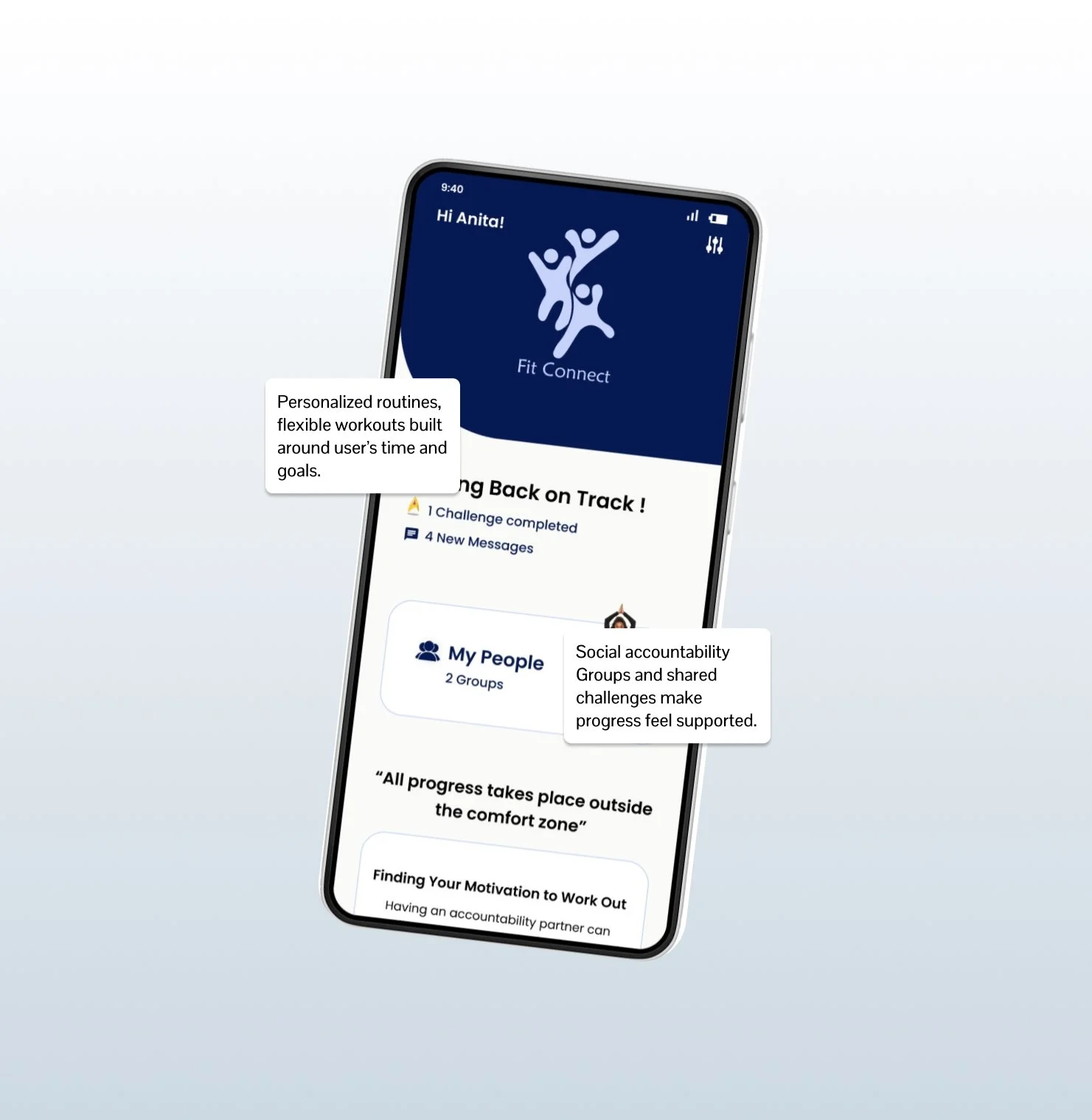
A mobile experience that helps people stay consistent through personalized workouts, social support, and achievable goals.
Role
Product Designer
Timeline
3 Weeks
Scope
Research to prototype
SETTING THE DIRRECTION
Turning intention into consistent action
Project Overview
This project aimed to create a mobile fitness app to support users with at-home training routines. Many individuals struggle with motivation, consistency, and variety when working out at home, especially beginners. This app provides a supportive community, tailored workout options, and motivational tools to help users maintain a regular exercise regimen.
The Goal
The goal was to design an engaging fitness app that not only helps users meet their goals but also creates a supportive, encouraging community. The app addresses the most common obstacles of at-home fitness: lack of motivation, limited exercise variety, and insufficient support
RESEARCH APROACH
Understanding what makes consistency difficult
I combined primary and secondary research to understand users’ at-home fitness behaviors, evaluate the existing market, and identify opportunities for a more supportive experience.
01 Identify the primary obstacles
Understand the obstacles people face when trying to maintain a consistent at-home workout routine.
Review leading fitness apps to identify common patterns, useful features, and gaps in the current experience.
02 Evaluate the market
Find ways to make mobile fitness more usable, motivating, and accessible—particularly for beginners.
03 Explore opportunities
Methods Used
Primary: User Interviews
Secondary: Market Research
Evaluation: Competitive Analysis
USER INTERVIEWS
Learning what keeps people moving, or makes them stop
I spoke with people who exercise at home to understand their routines, motivation, frustrations, and experiences with fitness apps.
Participants
7 People
Age Range
24- 49 years
Shared Behavior
Exercise at home
Interview Focus:
1.
2.
3.
What motivates people to begin and maintain an at-home exercise routine?
What obstacles make it difficult to stay consistent over time?
How do people currently use fitness apps, and where do those experiences fall short?
INTERVIEW-FINDINGS AND INSIGHTS
Consistency depends on flexibility, variety, and support
What participants struggled with
What participants needed
1. Short, flexible workouts
Quick routines would make exercise easier to fit into changing schedules.
2. More variety
Options such as yoga, Pilates, and live workouts could sustain interest.
3. Personalization
Users valued adjustable routines, timers, and guidance matched to their ability.
4. Social accountability
Groups, shared challenges, and live sessions could provide encouragement and support..
1. Limited time
Participants often had no more than 15–20 minutes available for exercise.
2. Low motivation
Exercising alone made it difficult to begin workouts and stay consistent.
3. Repetitive routines
A lack of workout variety caused boredom and reduced long-term engagement.
4. Limited control
Users wanted to adjust workout length, difficulty, and exercise type to fit their needs.
COMPETITIVE ANALYSIS

No single competitor combined simplicity with support
I tested three fitness apps and reviewed user feedback to understand their core strengths, recurring limitations, and opportunities for Fit Connect.
Opportunity for Fit Connect
Combine the simplicity of short workouts with the motivation of social accountability, then give users more control over how and when they exercise.
AFFINITY MAPPING
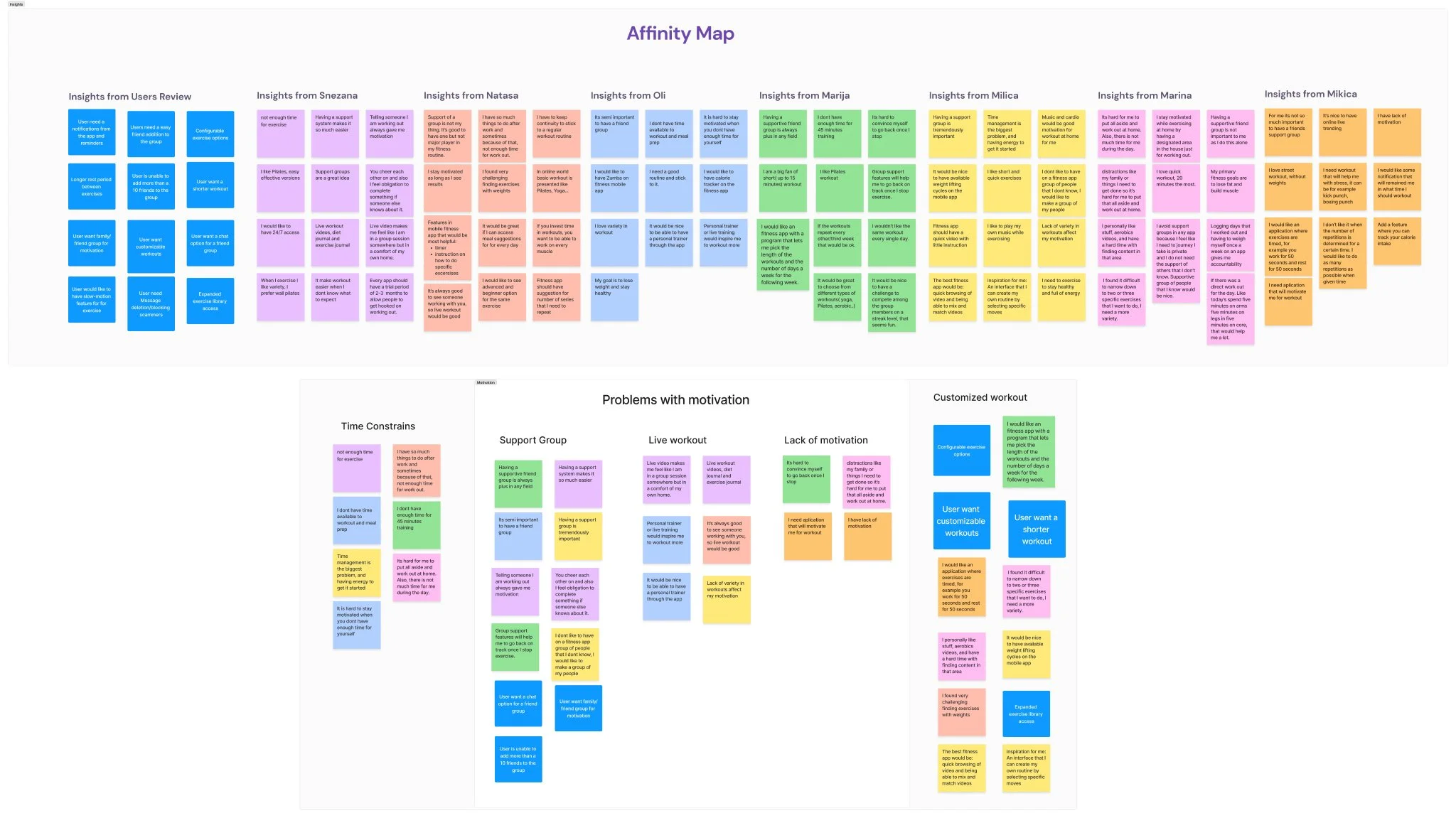
Limited time and low motivation were the strongest barriers, while flexible workouts and social accountability emerged as the biggest opportunities.
PERSONAS
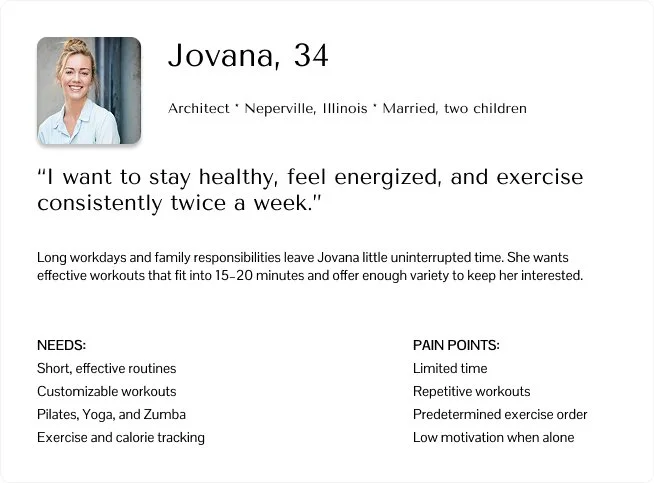
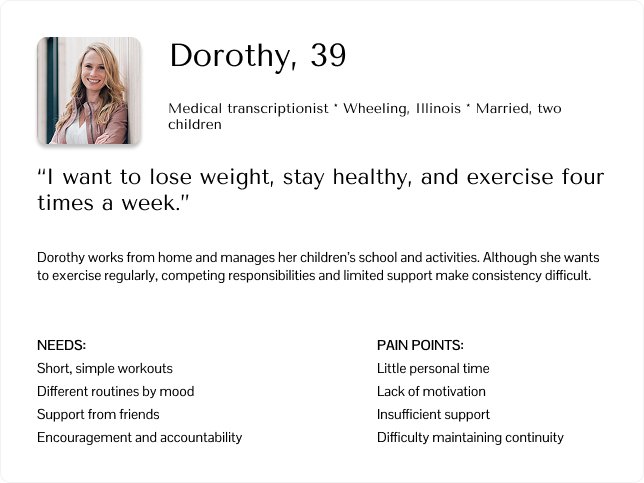
Two busy lives, one shared need for consistency
DEFINE
From patterns to product opportunities
Busy adults who exercise at home need a flexible and supportive way to stay consistent because limited time, repetitive routines, and exercising alone make motivation difficult to maintain.
POINT OF VIEW
How might we help busy adults build a consistent at-home fitness routine through flexible workouts, variety, and supportive accountability?
HOW MIGH WE?
Product direction
Design a flexible fitness experience that combines short, personalized workouts with variety, progress tracking, and social motivation
FEATURE PRIORITIZATION
Turning research into a focused product scope
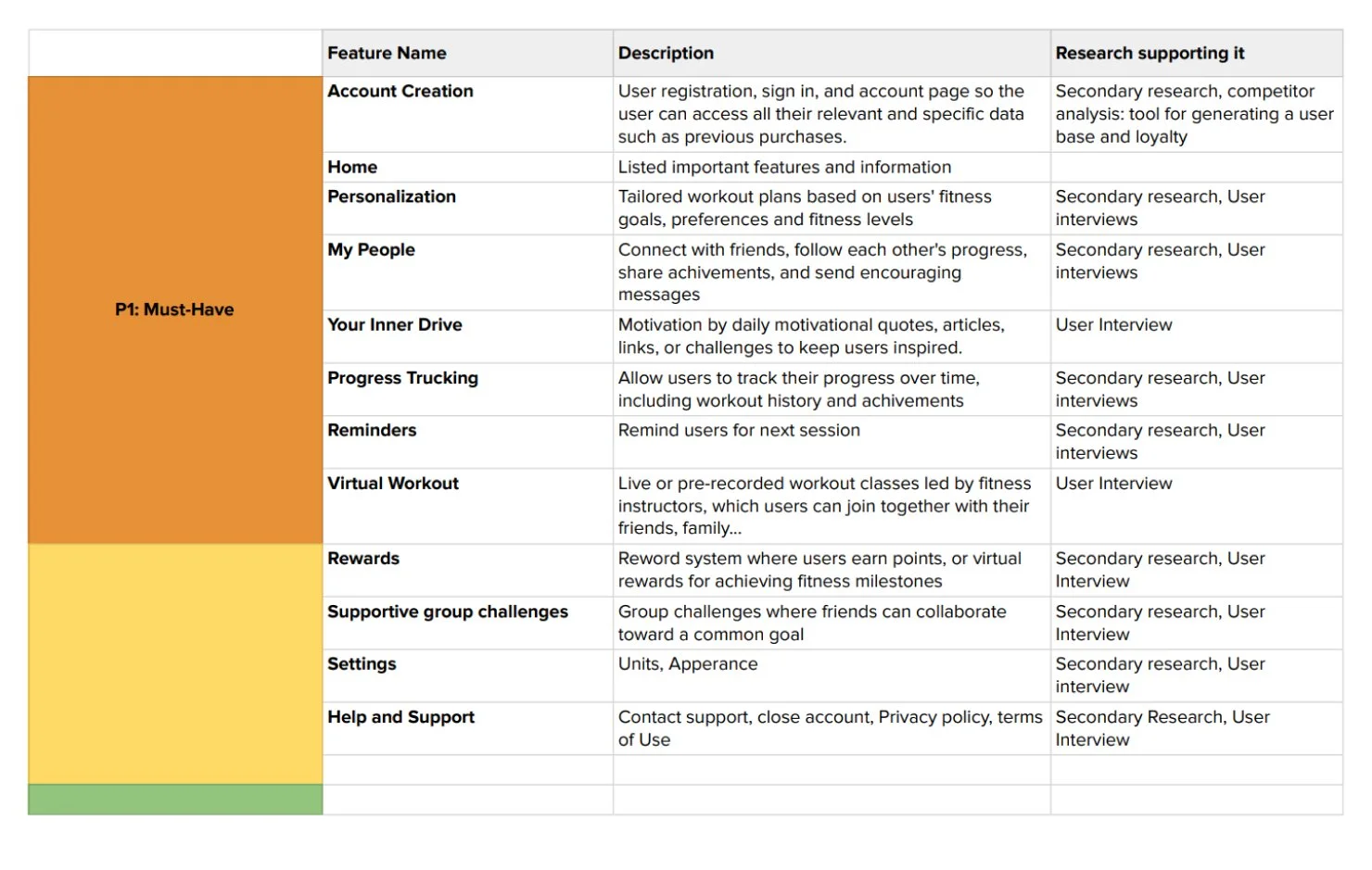
I evaluated each feature against the needs uncovered in research, then balanced user value with feasibility and relevance to the core problem.
USER FLOW
Research revealed two primary barriers to consistency: low motivation and limited time. I created two user flows to explore how Fit Connect could address each challenge.
Flow 1: Completing a Group Challenge
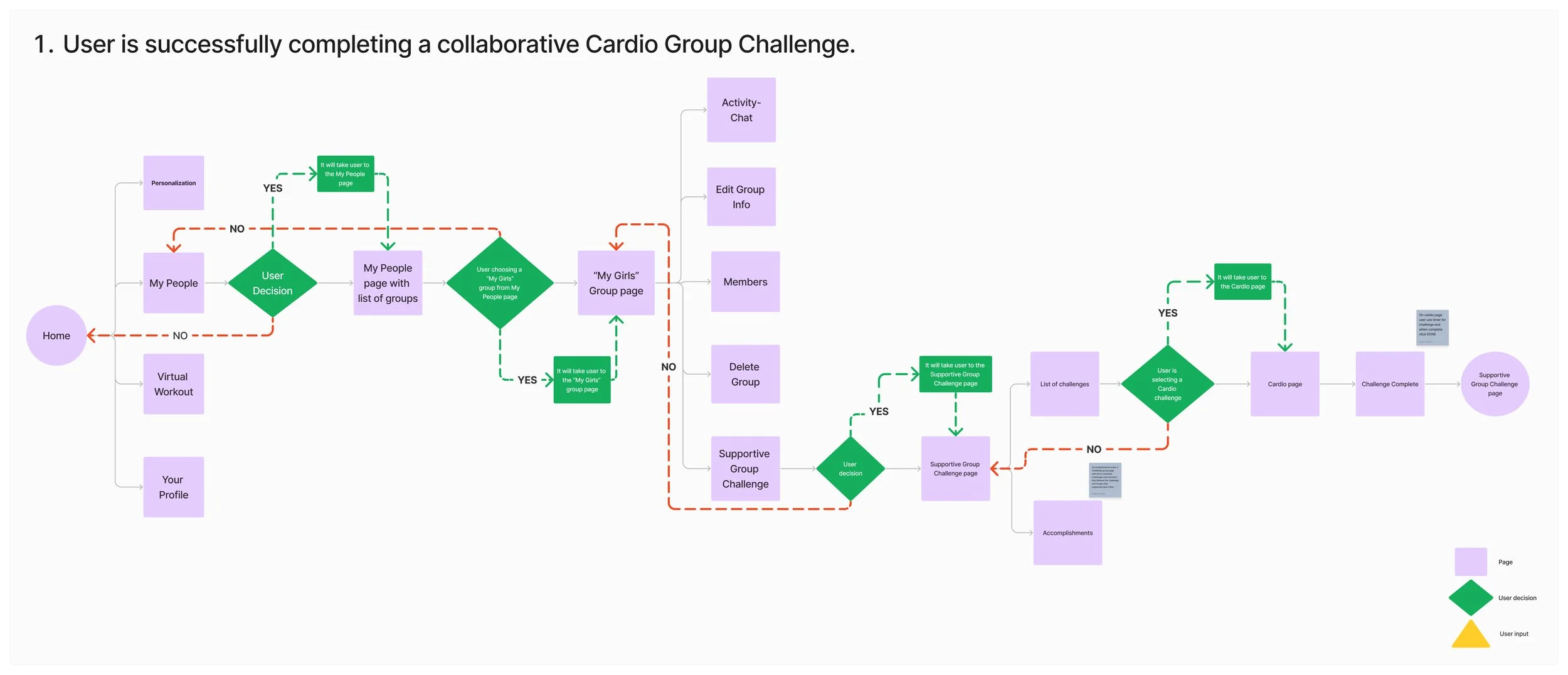
Because motivation was a major barrier, I designed a flow for completing a collaborative group challenge. The experience encourages accountability and support among group members without creating a competitive environment.
Flow 2: Completing a Short On-Demand Workout
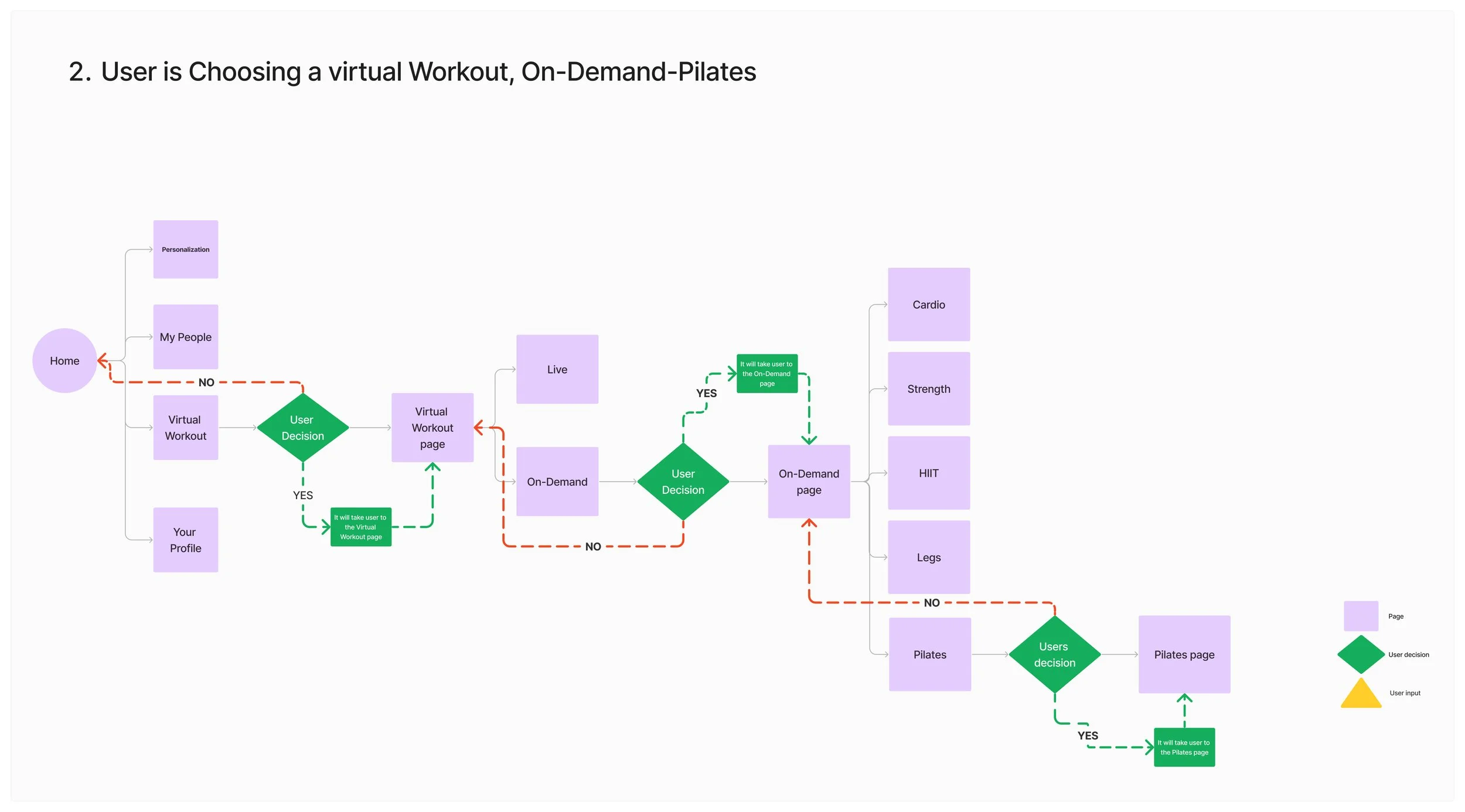
Limited time was another major barrier. This flow shows how users can quickly find a short on-demand session, select Pilates, and complete the workout through the virtual workout experience.
CONCEPT TESTING
Testing the structure before refining the interface
Number of participants:
10
Participants age:
25-47
2 Task flows:
FigJam sketches
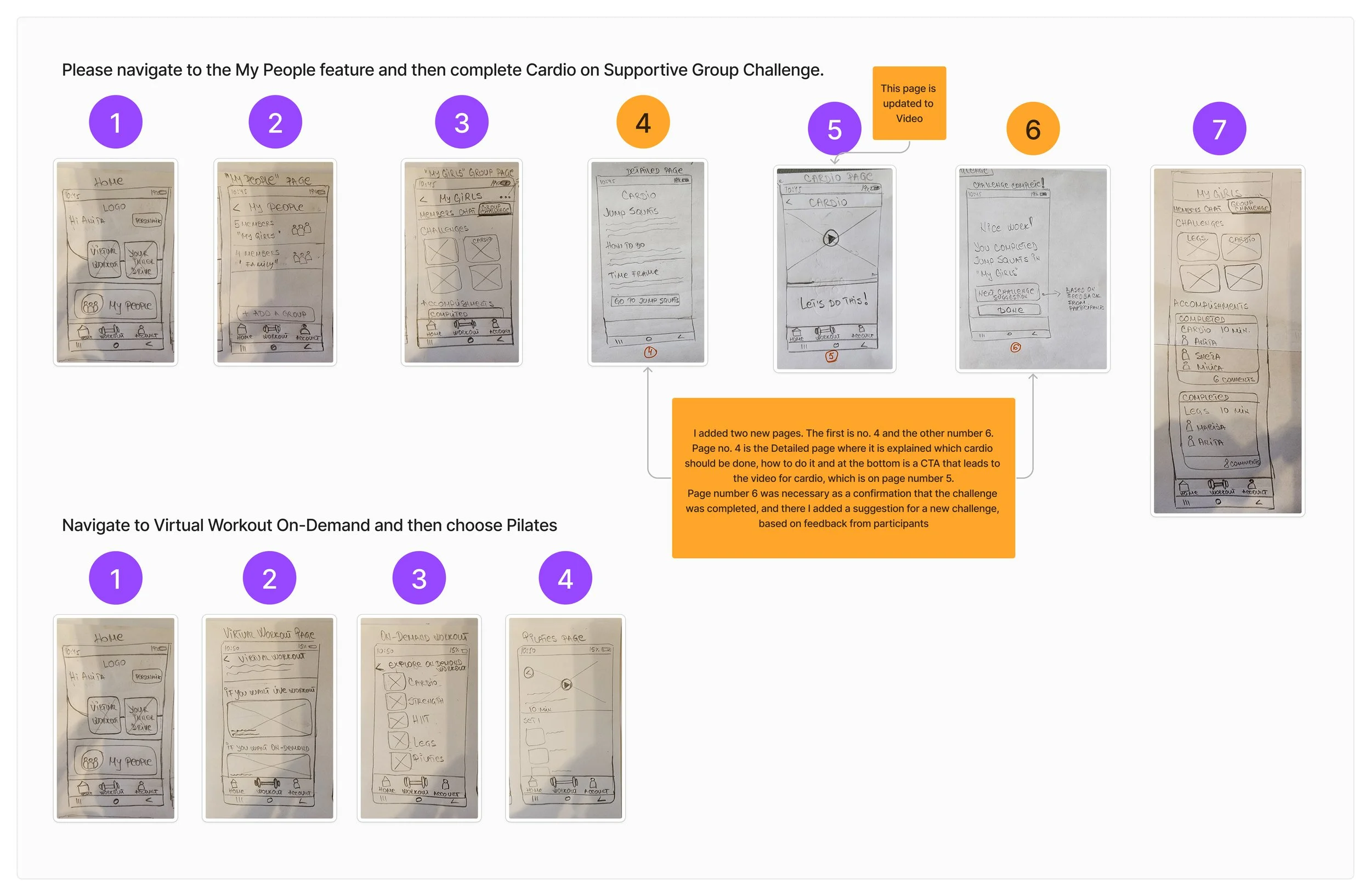
Concept testing of wireframes is essential because we can determine if the project is going in the right direction. I performed usability testing before digitizing the wireframes. Method used: Sketches were provided on the FigJam screen. I used low-fidelity wireframes. The users were asked to walk through how they would complete the task by pointing to the screens. I was able to watch the user move around the screen.
Observation
The main navigation was understood.
Participants could complete both tasks, but one part of the group challenge flow created uncertainty.
Design change
I added context before and closure after the workout.
A challenge details screen explained the activity, while a completion screen confirmed progress and the next step.
Outcome
The revised flow had a clearer beginning, transition, and ending.
The iteration resolved the gap before the interface moved into higher-fidelity design.
DIGITAL WIREFRAMES
Turning tested ideas into structured experiences
After validating the sketches, I translated the revised flows into digital wireframes. This stage established navigation, content hierarchy, and interaction patterns before visual design.

What this established: A clear information architecture and two task flows ready for visual design and higher-fidelity prototyping.
BRAND SYSTEM
Core Value: Optimistic, Friendly, Inviting, Modern, Minimalistic
Initial direction:
Creating an identity that feels active, supportive, and trustworthy
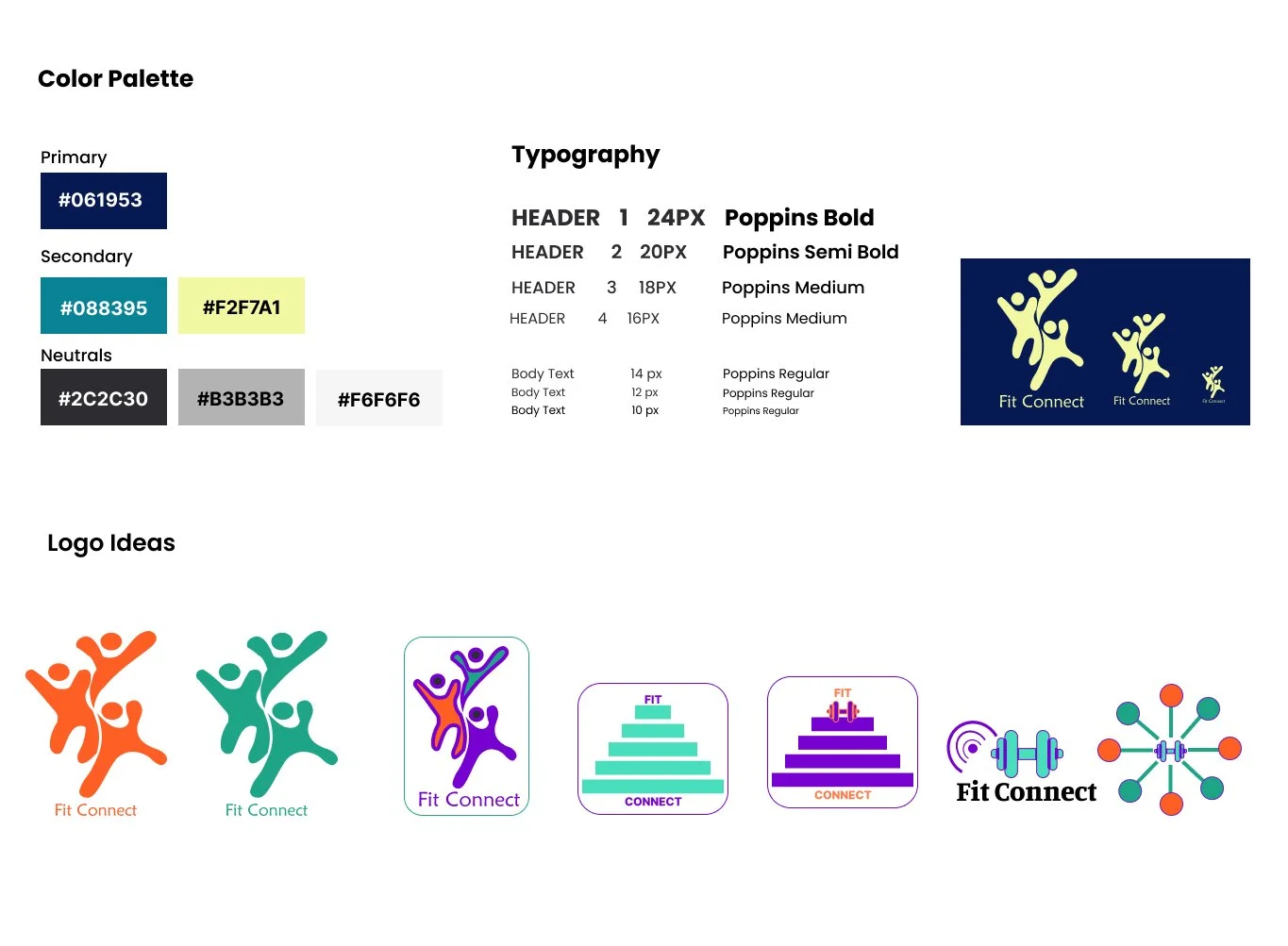
Refined direction:
I initially chose the first color palette for my design, but I realized that the secondary colors didn't match well with the overall look. To maintain the visual hierarchy, I switched to a new color selection that would better complement the design. I also made sure that the new palette passed accessibility testing to ensure that everyone could use it.

HIGH-FIDELITY DESIGN
Turning the concept into a polished experience
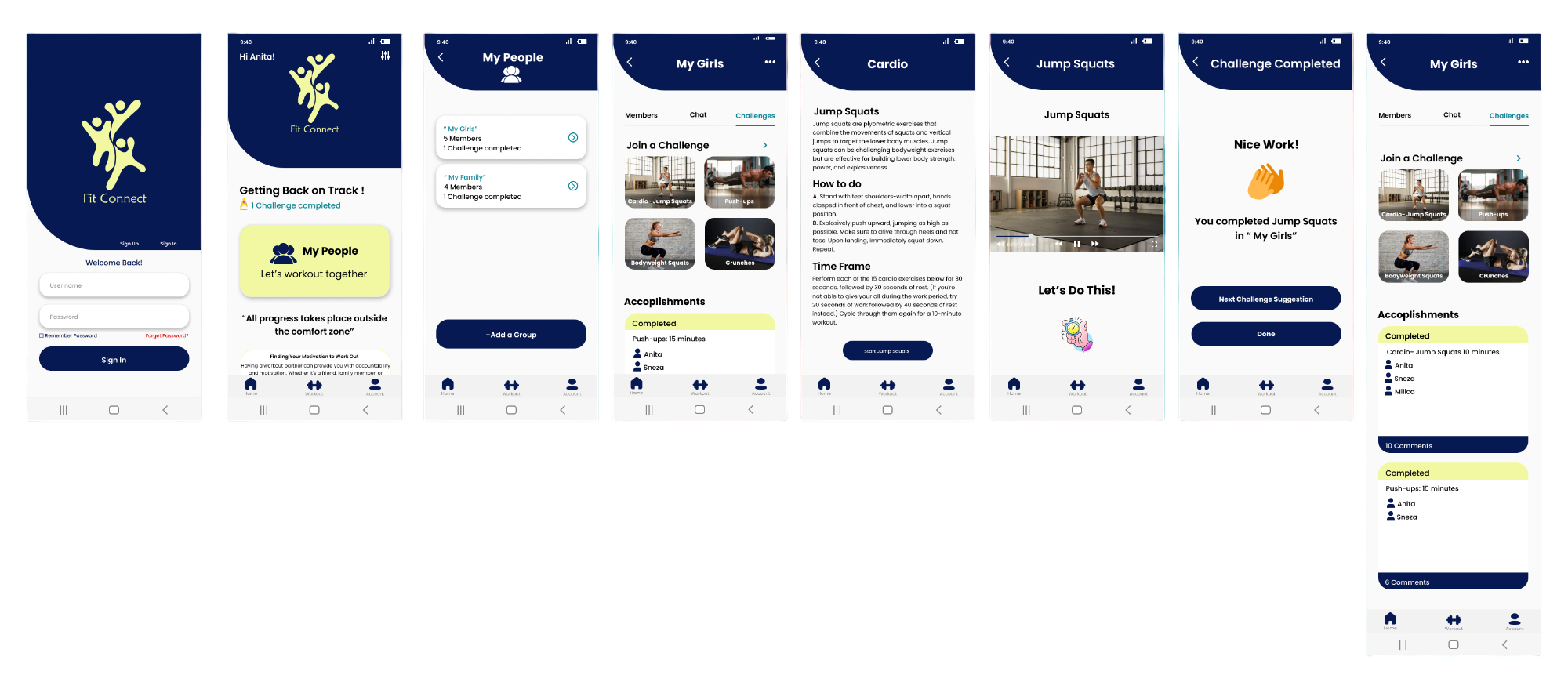
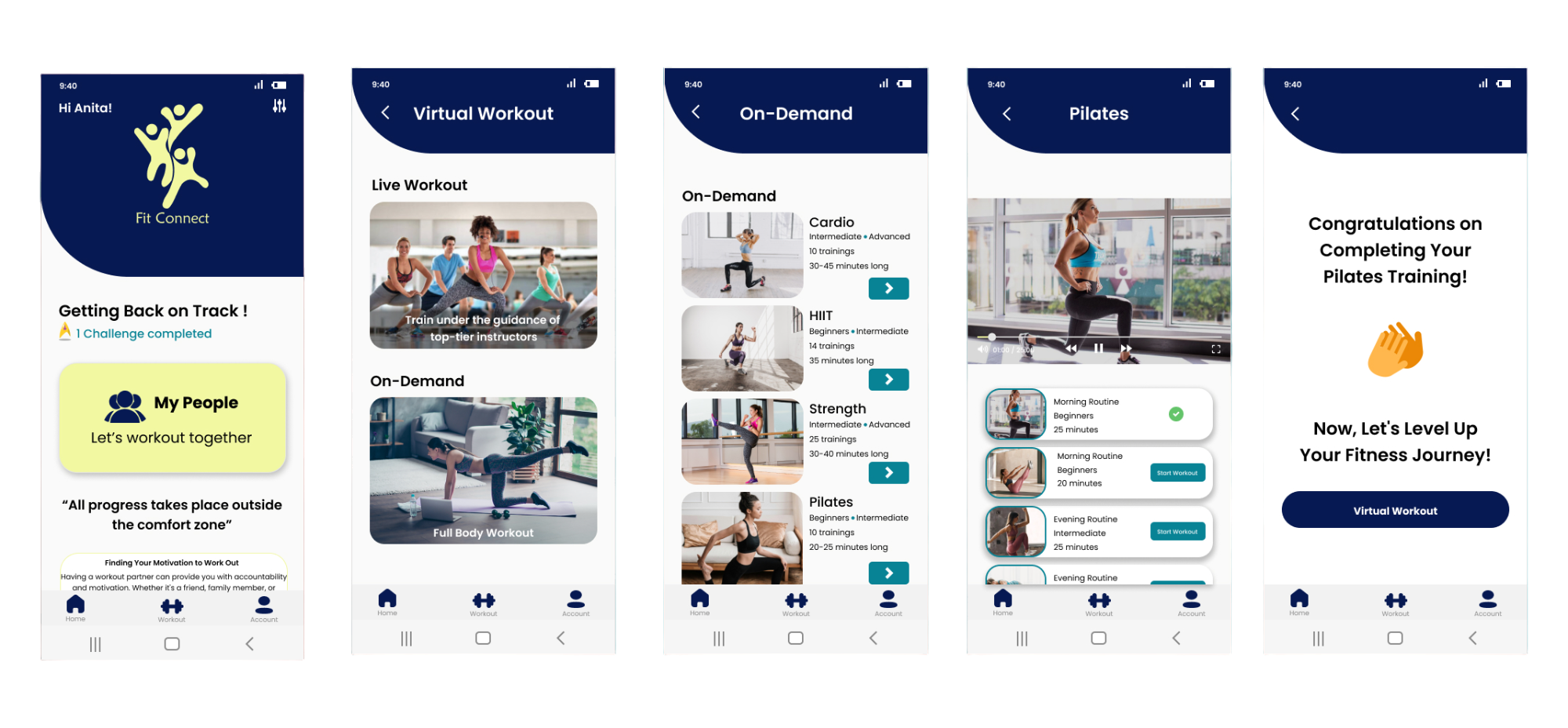
I applied the initial brand system to the validated flows, using clear hierarchy, supportive feedback, and consistent interaction patterns across the experience.
USABILITY TESTING & ITERATIONS
Refining the experience through user feedback


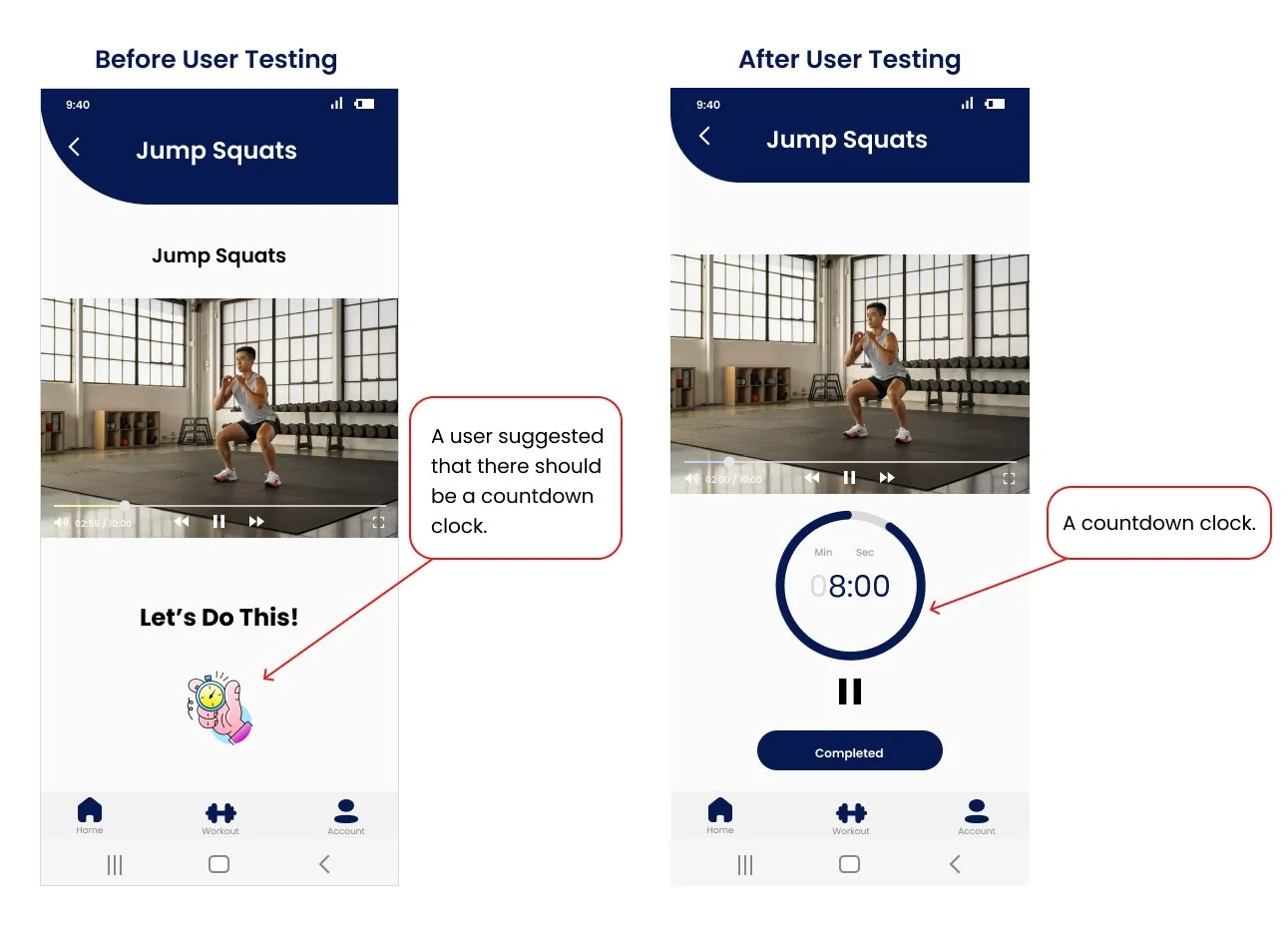
High Fidelity Wireframes

After finalizing high-fidelity screens, I created a prototype for everyone to demonstrate the full user experience.
Key Takeaways:
I enjoyed working on this project, which had a timeline of two weeks. Throughout the process, I made sure to incorporate all of the usability principles to ensure that the final product was user-friendly. During the usability tests, I made sure to actively listen to feedback and implement any important changes to the Fit Connect application. This project went through several iterations, which taught me the importance of taking all feedback and user reactions into account. Every iteration was a step toward improving the project.